Custom Label Solutions
Design the Exact Label Stock that You Need
Customized Label Stock For Your Business
All companies need labels for different parts of their business. IPSi has the knowledge and experience to help you get the exact label stock that you need to run and market your business. From the label size to the material, from die-cut to continuous stock, from label shape to the finer details, you can work with us to find the perfect fit.
Anatomy of a Label
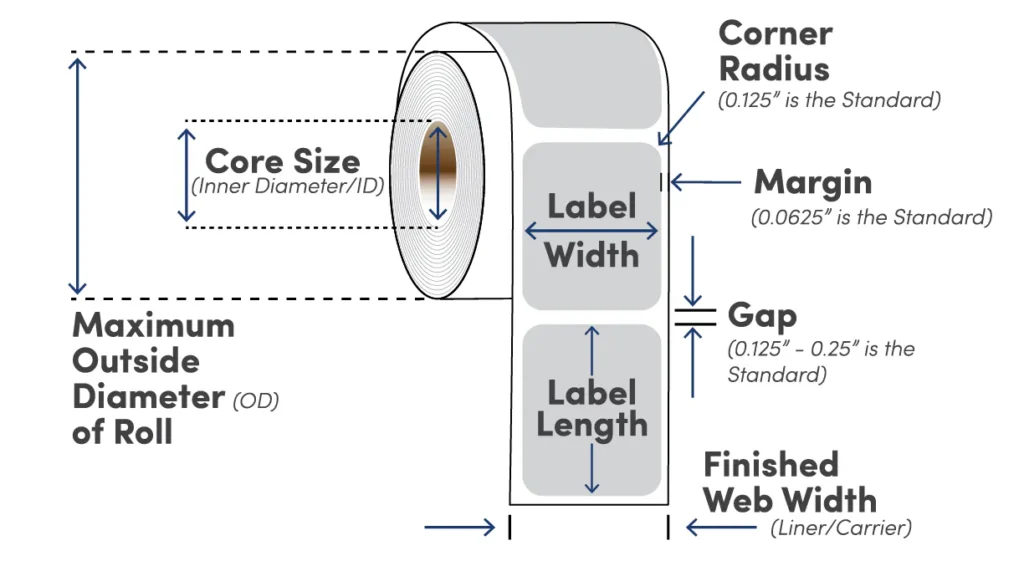
- Label Width/Length: The size of a label. If using a continuous, non-black mark stock, you only need to define the width.
- Gap Size: The empty liner space between die-cut labels (0.125″ – 0.25″ is the standard).
- Left/Right Margins: The empty liner space on the left and right of the label (0.0625″ is the standard).
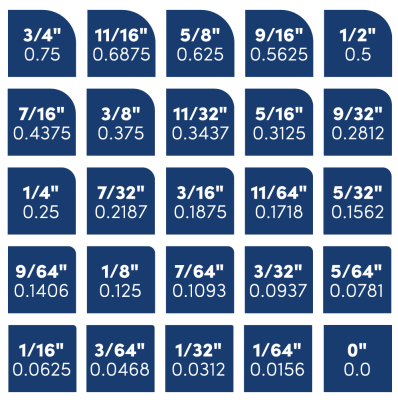
- Corner Radius: The rounded edge of the label corner (More information below, 0.125″ is the standard).
- Finished Web Width (Liner/Carrier): The full width of the liner that a label comes on.
- Core Size (Inner Diameter/ID): Core sizes normally come in 1″, 2″, 3″, and 6″ sizes. This size depends on the type of printer you are using.
- Maximum Outside Diameter (OD): The size of the label roll with both the core and the labels. This size depends on what size a printer can take or if you are using a winder. This size will normally be between 4″ to 12″.
Label Corners
For rectangular die-cut labels, you can choose different sized rounded corners. Below is a chart of corners that can be used for a rectangular label.
Label Shape
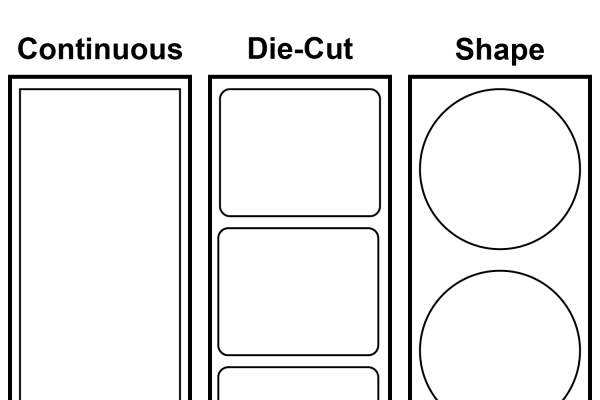
Depending on requirements, a basic rectangular die-cut label may not be the right fit for a project. A label can also be designed to come in any shape or as a single continuous strip that can be cut at any point. For stock like this, a blackmark might be required on the liner so that the printer knows where to start and stop printing.
Pressure Sensitive Label Construction
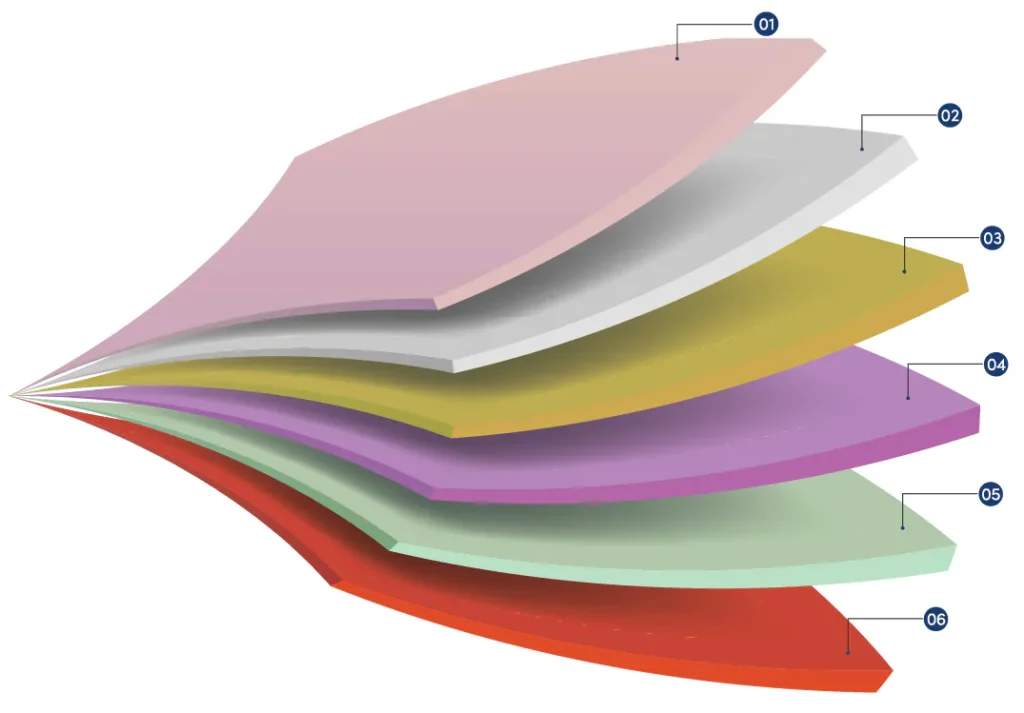
Labels are constructed using several different layers:
- Tapcoat or Print Receptive Coating: A coating that allows certain printers to print to the label, such as an inkjet coating for the Epson ColorWorks series.
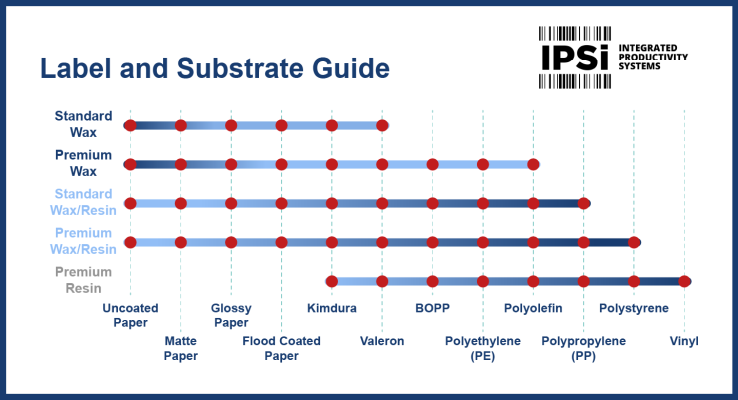
- Facestock: The main material of a label, such as paper or polypropylene, and the color, such as white or reflective.
- Primer or Barrier Coating: Different optional materials that affect how the label looks or how it sticks to a surface, such as the black coating on the back of a blackout label (RFID chip?).
- Adhesive: The sticky part on the bottom of the label.
- Release coating: The glossy coating between the label and the liner that allows you to pull the label off (Optional if choosing a linerless or tag stock).
- Release Liner: The paper strip that the label is attached to (Optional if choosing a linerless or tag stock).
Wind Direction
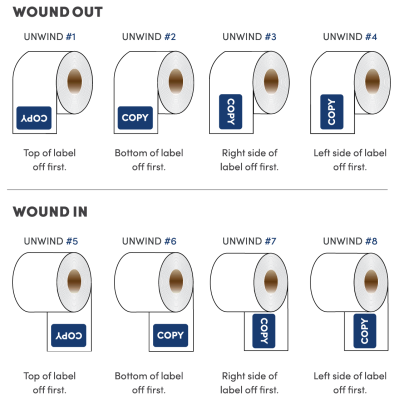
Depending on the printer or the use of a label applicator, a label may need to be printed in a certain direction. Below is a chart of all of the types of wind direction for a label roll.
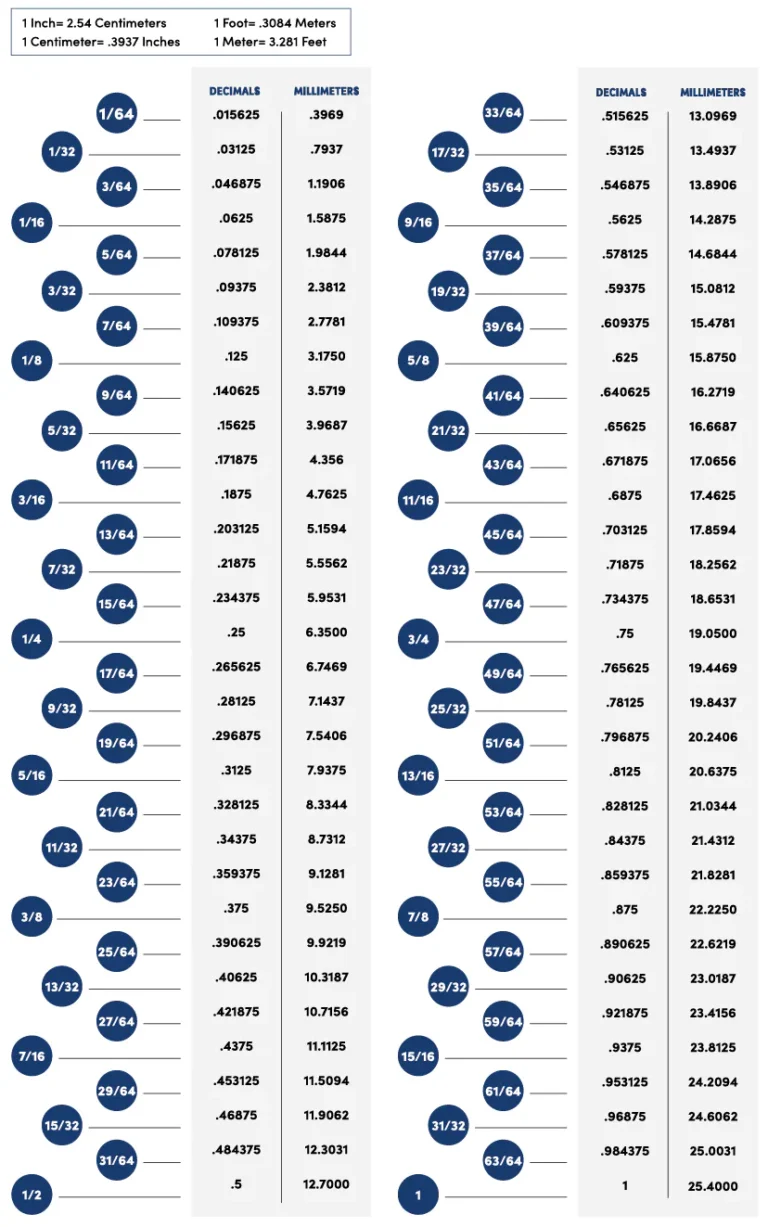
Decimal Converter
Our strategic approach to upgrading your product or barcode label printing process helps you realize significant cost savings and create a more agile, responsive, and competitive supply chain.
Embark on Achieving Enhanced Efficiency, Precision, and Productivity
As experts in implementing label solutions and optimizing business processes, we excel at designing custom label stock for your business. Our goal is to provide label stock that fits your needs so you can focus on running your business efficiently and effectively.